Key Takeways
- The Problem: Traditional marketing "pyramid" hierarchies filter out technical truths and slow down efficient AI implementation.
- The "Nadella Shift": Leadership must engage directly with the "builders" within the team (single contributors) to identify real-world technical blockers.
- Mission-Based Pilots: Move away from siloed teams towards small, autonomous squads with high-stakes goals, removing unnecessary approval bottlenecks.
- Guardrails over Gatekeepers: Replace slow manual approvals with AI-powered brand/compliance "Custom GPTs" to shrink feedback loops from hours to minutes.
Microsoft CEO Satya Nadella recently started a weekly meeting with a strict rule: No senior managers allowed.
He meets directly with the engineers building the AI tools, based on a simple logic: in a large company, bad news tends to travels slowly up the chain of command. By the time it reaches the CEO, it has been polished, softened, and filtered by middle management.
In the AI era, you cannot afford polished smoke screens. You need the messy truth.
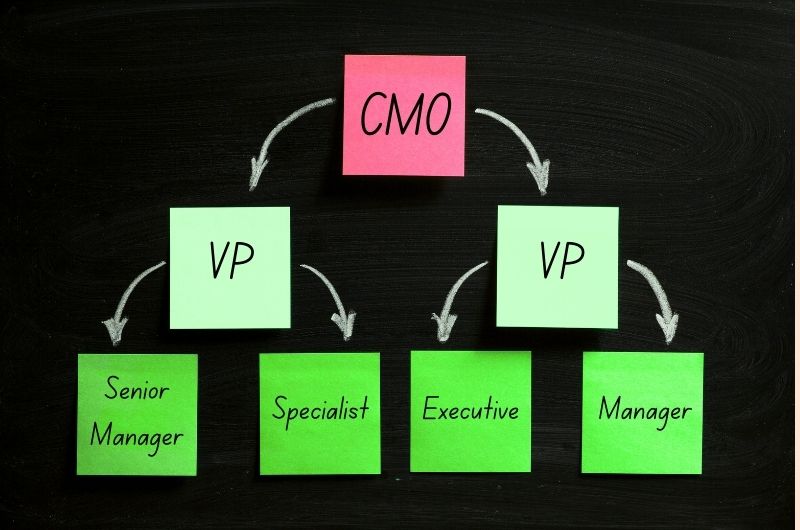
For marketing leaders, this is a wake-up call. Our organizational charts are usually built like pyramids, designed for stability, not speed. But in a time where AI tools update weekly, stability looks like stagnation.
Here is how a CMO can apply the "Nadella Shift" without blowing up the entire department.
1. How to Solve Marketing Speed Problems with Mission-Based AI Pilots
Most marketing teams are siloed: The Content Team, The Design Team, The Paid Media Team, etc. A project typically gets handed off like a baton in a relay race; it's structured, but it's slow.
You don't need to reorganize the whole department to change this. Instead, run a Mission-Based Pilot.
- The Method: Pull three people, for example, one writer, one data analyst, and one designer, out of their day jobs.
- The Mission: Give them a single high-stakes goal, for example: "Launch our new AI-focused newsletter and get 1,000 subscribers in 30 days."
- The Rule: They do not need approval from their functional managers for every decision. They work together (digitally or physically) and make the call on executions.
- The Balance: This is a pilot within the wider team. The rest of the department continues with "Business as Usual" (BAU) to keep the lights on. This prevents the chaos of a total restructure while proving that small, autonomous teams move faster.
2. Bypassing the Management Filter: Implementing a Growth Roundtable
Nadella skips his managers to get the "ground truth". You should too, but you need to do it without undermining your directors.
To implement a monthly Growth Roundtable:
- Who: You and the individual contributors (the "builders" who are usually two levels down).
- The Agenda: This is not a grievance session about bad people managers. It is a session to address technical blockers. Ask specific questions to elicit their views: "Which tool is slowing you down?" or "Where are we wasting time on manual work that AI could fix?".
- The Outcome: You will likely find that your team is ready to move faster than your IT or Legal policies allow. Your job is to clear those specific hurdles.
Your directors will feel this and they should. Frame it delicately but clearly when you introduce the Roundtable: "This isn't about going around you. It's about me understanding technical problems that might not make it into our leadership meetings. I need to know where the actual friction is so I can help you clear it.", then share what you learn with them immediately.
The point isn't to cut them out; it's to get information that the org chart risks filtering out.
3. From Manual Feedback to AI Feedback Loops: A Better Integration Strategy
Don't wait for a perfect "AI Agent" to replace your workflows. In fact, you can get started with shared knowledge and expand on integrating AI after.
Once you've identified the blockers in your Roundtable, here's the fastest way to remove them.
- The Old Way: A junior marketer drafts copy, emails it to a manager, waits 24 hours for feedback, revises, and repeats.
- The Networked Way: The team builds a "Custom GPT" loaded with your brand voice, persona data, and compliance rules.
- The Result: The junior marketer runs their draft through the Custom GPT first. It catches 80% of the errors (tone, forbidden words, syntax) instantly. The manager then only needs to review the strategy, not the typos. The "feedback loop" shrinks from 24 hours to 2 minutes.
Yes, the manager still reviews strategy but removing the typo-hunting means they can focus on the work only they can do: the judgment calls about positioning, the decisions about which channel to prioritize, and the trade-offs between brand and performance.
4. Scaling AI: Using Guardrails Over Gatekeepers
In regulated industries, like healthcare or finance, the hierarchy exists for a reason: compliance. If you remove the "manager approval" step, you risk a lawsuit.
The solution is to replace the Gatekeeper (a person who slows things down) with Guardrails (a clear zone of safety).
- Define the Safe Zone: Explicitly tell the team: "You can use these three approved AI tools. You must never input PII (Patient Identifiable Information). Anything else inside these tools is approved to ship.".
- Iterations and Checks: Build in lightweight review points without reverting to the old approval bottleneck. For example, require a 24-hour peer review before publishing, or mandate that high-risk content (legal claims, financial data) gets a compliance spot-check. The difference is speed: these checks happen in parallel with the work, not as sequential gates that stop momentum.
- Trust: Once the guardrails are set, get unnecessary blockers out of the way.
The "Nadella Shift" isn't about disrespecting management. It's about acknowledging that in an AI world, the person closest to the code (or the content) often knows more than the person with the "VP" title.
Your job as a leader is no longer just to approve work. It is to build the network that allows the work to flow. You can keep running approval meetings while your team watches opportunities close. Or you can do what Nadella did: trust the people doing the work to tell you what's actually broken.